
The Pivot - II
By Elena Mencacci and Carla Sartore

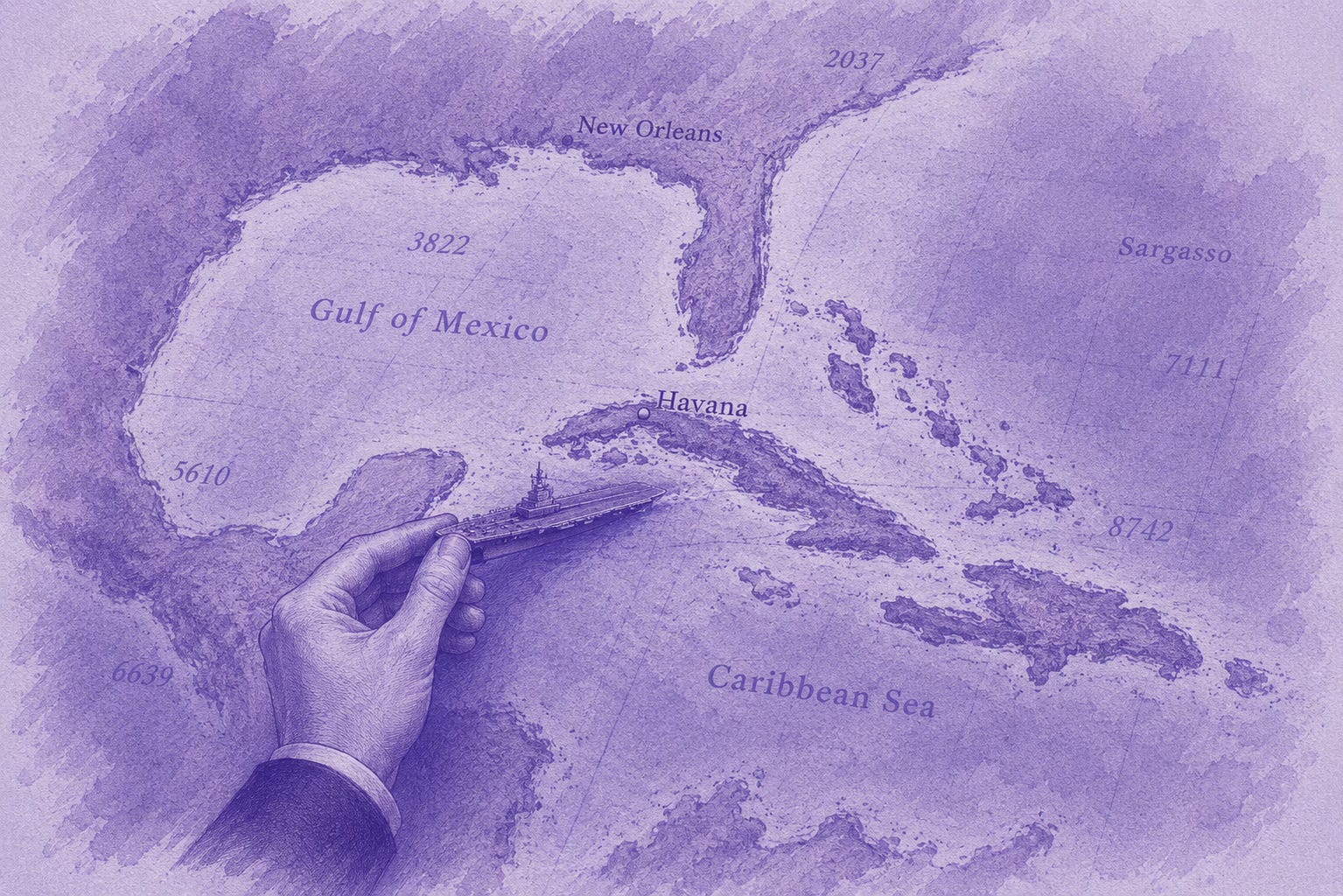
Tensions between USA and Cuba due to aircraft carrier threat
“Welcome to the Caribbean, Nimitz Carrier Strike Group”. This is the caption of a post by Southcom on X, the US Southern Command, which is responsible for military operations and security cooperation in Latin America, the Caribbean, and adjacent waters (Mexico not included). Southcom has deployed the Nimitz, a nuclear-powered aircraft carrier, as well as its strike group off the coast of the Caribbean. In the same post, Southcom highlights the capability of the USS Nimitz demonstrated “from the Taiwan Strait to the Arabian Gulf”, ensuring stability and defending democracy on a global scale.
For months, US President Donald Trump has been threatening to take control of Cuba to overturn the regime and build a new one. He may have seen an opening after the indictment of former Cuban President Raúl Castro (who was in power from 2008 to 2018) by the US, an action that coincided with the Trump administration intensifying pressure on Cuba. Castro and five others have been charged with shooting down two civilian airliners near the Cuban coast in 1996 while Castro was serving as Defence Minister. They are being accused and charged of murder and conspiracy to kill American citizens. The incident involved the downing of two planes, belonging to the humanitarian aid group ‘Brothers to the Rescue’ near the island’s coast. Cuban President Miguel Díaz-Canel has stated that “the attempted indictment is a political act with no legal basis”.
By the way, different analysts have suggested that the US seems to be employing the same modus operandi as for the mission in Venezuela, which evidently led to a regime change. Around the end of 2025, to support the operation and capture of former Venezuelan President Nicolás Maduro on 3 January, Washington has sent a similar aircraft carrier.
Reactions of the international scene
That being said, as of right now, the international community is paying close attention. Russia described the indictment of Raúl Castro as ‘bordering on violence’. Kremlin spokesman Dmitry Peskov criticised the use of such methods against the highest government officials, stating his opposition towards the action and complete solidarity with Cuba.
Beijing’s response was equally harsh. Chinese Foreign Ministry spokesman Guo Jiakun criticised the US for imposing continuous sanctions and threatening to use force against the island.
The American intentions
The US Secretary of State Marco Rubio, who was born in the US to parents who emigrated from Cuba before Fidel’s revolution, expressed his views on the matter, stating that Cuba accepted the US offer of humanitarian aid of a total of 100 million dollars. The US is therefore looking forward to helping the Cuban population. Furthermore, Trump asserts that military action is unnecessary, as ‘the country is falling apart’. However, although Havana has approved the aid, it is still unclear whether Washington will accept the conditions of the negotiations. Rubio explained that the US would prefer to reach an agreement, but is still prepared to take action if necessary.
Opinions vastly differ on what to expect. Many experts are unsure whether the US is willing to open a new ceasefire in another country. However, there is little expectation that the former Cuban President will voluntarily appear in the US. According to rumours, the Nimitz aircraft carrier is set to play a fundamental role in the operation to capture Castro, modelled on the Maduro case
.